AI in Agriculture: How Smart Technology Is Helping Farmers
Agriculture depends on many things that farmers cannot control.Weather can change. Water availability can vary. Pests can damage crops. Market conditions can shift.Artificial intelligence is becoming another tool farmers can use to make better decisions.The idea is simple: collect useful information, analyze it, and use the results to improve farming decisions.
AI and Crop Monitoring
Large farms can be difficult to monitor manually.A farmer cannot inspect every plant every day.Drones, cameras, and satellite images can provide a broader view.AI can analyze these images and identify unusual patterns.For example, an area of a field may appear different because crops are receiving less water.The farmer can investigate that specific area instead of treating the entire field in the same way
Smarter Irrigation
Water is one of the most important resources in agriculture.Using too little water can damage crops.Using too much wastes resources.AI can combine information from soil sensors, weather forecasts, crop conditions, and historical data to help farmers decide when irrigation may be needed.This does not mean farmers simply press a button and let AI run the entire farm.Human experience remains important.The technology provides additional information that can support better decisions.
Detecting Plant Diseases
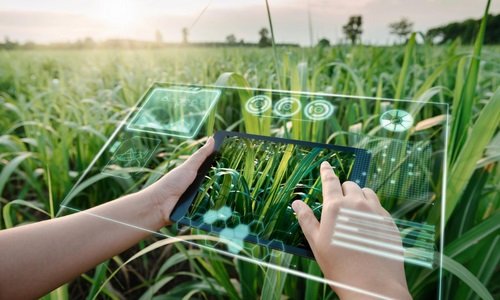
Plant diseases can spread quickly.If a farmer identifies a problem early, treatment may be easier.AI systems can analyze photographs of leaves and identify visual patterns associated with certain diseases.A farmer could photograph a suspicious plant and receive a possible assessment.Such systems should not replace agricultural experts, but they can provide useful early information.
AI and Pest Management
Pests can cause major crop losses.Instead of applying treatment across an entire field, smart farming systems can potentially identify areas where pest activity is concentrated.This approach may reduce unnecessary use of pesticides.It can also save money.The technology works best when combined with traditional farming knowledge.
Predicting Crop Yields
Farmers need to estimate how much they expect to produce.AI can analyze historical yields, weather conditions, soil information, and other factors to create forecasts.These estimates can help farmers plan storage, transportation, and sales.A prediction is never guaranteed.Unexpected weather or other events can change the result.But better estimates can still improve planning.
Weather and Farming
Weather information is essential for agriculture.AI systems can combine weather forecasts with farm-specific information.For example, a farmer may want to know whether irrigation should be delayed because significant rainfall is expected.A smart system can help bring different pieces of information together.
Small Farmers and Accessibility
One challenge is making agricultural technology affordable.Large farms may have the money to purchase drones, sensors, and specialized software.Small farmers may not.If AI-powered agricultural tools are to have a broad impact, they need to become affordable and easy to use.Mobile phones could play an important role because they are already widely used in many farming communities.
AI Does Not Replace Farmers
There is a misconception that smart agriculture means machines will replace farmers.Farming involves practical knowledge that is difficult to capture entirely in software.Experienced farmers understand their land, weather patterns, crops, and local conditions.AI can provide information, but farmers still make decisions.The strongest approach combines technology with experience.
The Future of Smart Farming
Agricultural AI will likely become more accessible.Farmers may use affordable sensors, mobile applications, drones, and automated equipment.Technology could help improve productivity while reducing waste.But successful adoption will depend on cost, reliability, training, and local conditions.
Final Thoughts
AI is giving farmers new ways to monitor crops, manage water, detect problems, estimate yields, and plan their work.It will not eliminate the uncertainty of farming.Weather will still change, pests will still appear, and markets will still move.But better information can help farmers respond more effectively.In the end, smart agriculture is not about replacing traditional farming.It is about giving farmers better tools.